News & History

What is happening, and where we come from

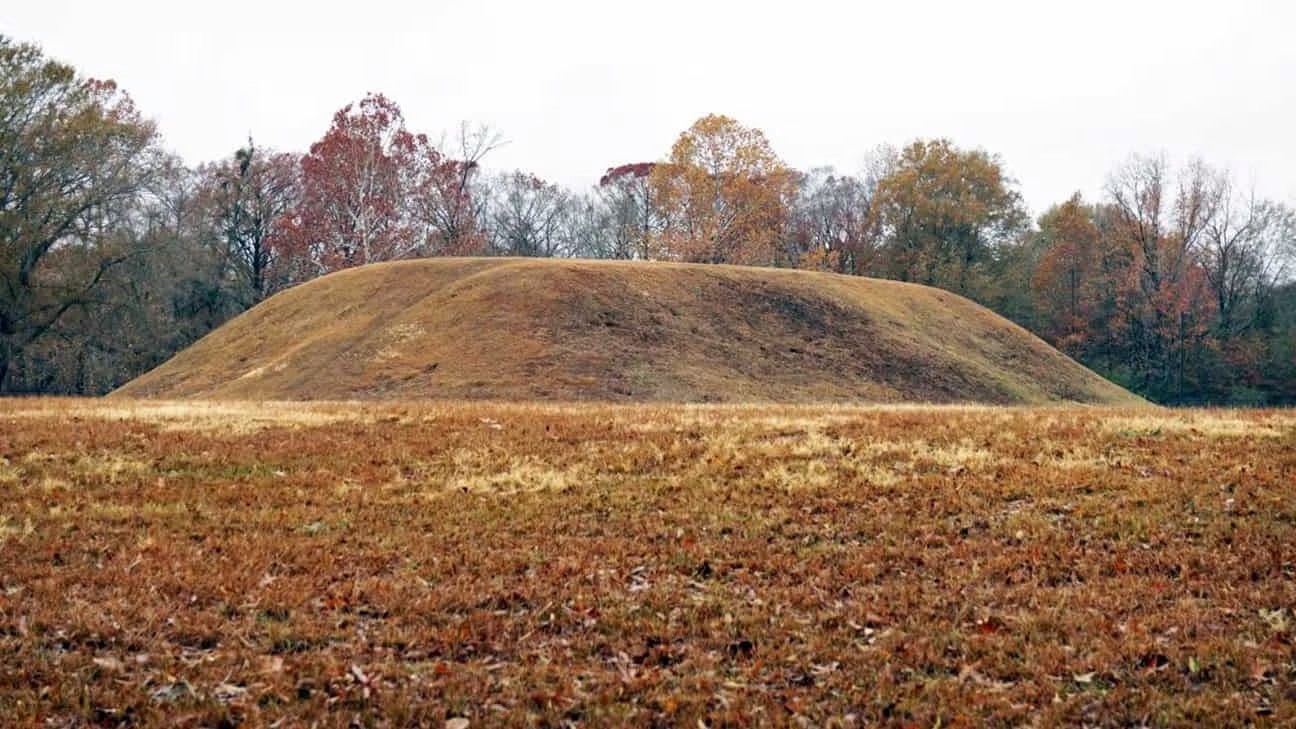
Two things in one place: the news the tribal office posts as matters arise, and the history of the Choctaw people, written for members reconnecting with their roots and for anyone who wants to learn — including the origin accounts of Nvnih Waiya, the Mother Mound.

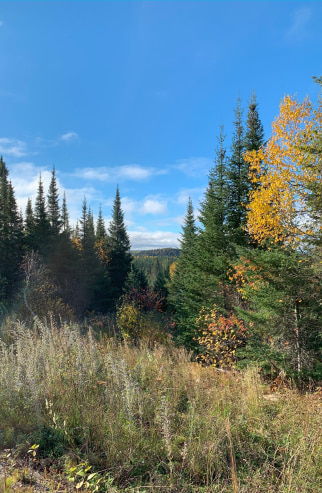
Tall conifers and autumn trees above a foreground of dry grass, under a blue sky
  1. November 6, 2026

    Two Threats to Tribal Sovereignty: OMB Financial Assistance Rules and Section 106

    The Choctaw Turtle Tribe is a treaty signatory Nation to the United Nations International Indigenous Nations (UIIN). As a member, we share the following alerts with our people, because these matters affect all Indigenous Nations.

    Why Government-to-Government Relations Matter

    The United States owes Tribal Nations a government-to-government relationship. That is not a courtesy; it is the basis on which Tribes are dealt with as Nations and not as ordinary interested parties.

    Two current federal proposals threaten that relationship. The Office of Management and Budget has proposed changes to federal financial assistance rules that could directly affect how Tribal Nations access and manage federal funding, and how we deliver essential services.

    Separately, the Advisory Council on Historic Preservation is advancing a rewrite of Section 106 of the National Historic Preservation Act. It would replace collaborative consultation with closed agency decision-making, and agencies would no longer have to consult Tribal Nations or seek our expertise on our own cultural resources.

    What is at stake is plain. On the OMB rule: access to federal funding, the management of that funding, and the delivery of essential services. On Section 106: consultation on our cultural places and ancestral homelands, including significant cultural landscapes and the reasonably foreseeable harm to them.

    UIIN strongly opposes both proposals. On the OMB rule, UIIN considers the short notice for these sessions inadequate for meaningful Tribal consultation, because Tribal Nations are sovereign governments and must have sufficient time to review and respond. On Section 106, UIIN opposes the proposed rule and calls on the Advisory Council on Historic Preservation to withdraw it and return to real government-to-government consultation.

    Tribal leaders and members are urged to make their voices and their sovereignty heard. Both flyers are here in full.
  2. November 6, 2026

    The Tribe Has Filed Its Comment on the 2030 Census

    The Choctaw Turtle Tribe, through its government-to-government relationship, has made its position known on the Census Bureau’s proposed 2030 rule, Docket No. USBC-2026-0628, which would bar race and ethnicity questions on the decennial questionnaire. The tribe, with UIIN, opposes that provision and asks that it be withdrawn.

    The central concern is visibility. Federal funding, program planning and civil rights enforcement follow the data. For American Indian and Alaska Native people the census is the one full count in which we identify ourselves, and for Native people living outside reservation and tribal-area boundaries it is often the only place they can be found at all, because geography alone cannot identify them.

    Native communities were already undercounted — by about 4.9 percent on reservations in 2010, and by nearly 6 percent in 2020. Programs that serve our communities, including the Indian Housing Block Grant and programs for community development, maternal health and transportation, rely on census-derived figures that can shape allocations for a decade.

    The tribe’s filing makes the point that tribal membership is a political status, not a racial classification. Removing the question does not honor that status; it removes the means of counting the people who hold it.

    The filing also objects to the process: tribal consultation was noticed two weeks in advance rather than the standard thirty days. The tribe asked the Bureau to:

    1. Withdraw the ban on race and ethnicity questions.
    2. At minimum, retain the American Indian and Alaska Native category and tribal affiliation reporting on the 2030 decennial census.
    3. Hold additional consultation with at least 30 days’ notice, and extend the comment period.
    4. Publish an analysis of how American Community Survey data would replace decennial data for tribal areas, including margins of error.

    The full statement is available here to read and download, in English and in a Louisiana French courtesy translation. The English version is the official filing.

  3. November 6, 2026

    The UIIN at COP31: A Platform for Our Concerns

    The United International Indigenous Nations has submitted a case story to the Local Communities and Indigenous Peoples Platform for COP31, and through it has been given a platform to set out the concerns of our social and cultural regions.

    The submission documents how large-scale industrial projects — including carbon capture and storage schemes, AI data centers, and gas pipeline development — are affecting Indigenous lands without free, prior and informed consent. It covers regions including Guyana, Odisha in India, Newfoundland, Ontario, and Louisiana.

    It also sets out the consent process the communities followed. Community leaders from each region reviewed and approved the inclusion of their stories, no culturally sensitive or sacred knowledge is disclosed without explicit consent, and communities retain the right to withdraw or modify their submissions at any time.

    The written account of the submission is above. The presentation itself is not posted on this page while COP is under way, and it will be added back here once the Clan Mother returns.

Send us something

Have a document, a photograph or a story for this page?

Members and tribal offices with something that belongs in the record — a resolution, a notice, a photograph from a gathering, a story about the tribe — can send it to the committee and it will be posted.

tribalbusinesscommittee@choctawturtletribe.org

Where our standing is recorded

The tribe’s constitution, its governing documents and its official resolutions are kept in one place on the Nation & Constitution page.

Nation & Constitution